If you are drawn to Fleming Island, you may already know the big question is not just price or square footage. It is lifestyle. Do you want a home built around pools, golf, parks, and shared recreation, or do you want the privacy and control that can come with a waterfront or larger parcel? This guide will help you compare both paths in Clay County so you can choose with more clarity and confidence. Let’s dive in.
The Main Choice on Fleming Island
On Fleming Island, the lifestyle split is fairly clear. Communities like Fleming Island Plantation and Eagle Harbor are built around shared amenities and managed common spaces. Waterfront enclaves and acreage-style properties, by contrast, tend to revolve around the lot itself, water access, privacy, and the realities of owning a more unique parcel.
That difference matters because it shapes your daily life. It affects how you spend weekends, how much upkeep you take on, how many rules you live with, and how much flexibility you have with your property. In other words, you are not just choosing a house. You are choosing how you want to live.
What Amenity Communities Offer
Fleming Island Plantation and Eagle Harbor represent the amenity-first model on Fleming Island. Fleming Island Plantation includes more than 2,400 homes across 17 communities, along with two amenity facilities, pools, basketball courts, volleyball, clay tennis courts, parks and playgrounds, golf, and Village Square shops and restaurants. Eagle Harbor offers a similar lifestyle mix with pools, tennis, pickleball, golf, parks, docks, and resident access systems.
For many buyers, that setup creates convenience. Instead of needing your own pool, dock, or recreational setup, you get access to shared facilities designed for neighborhood use. That can make everyday living feel active, social, and streamlined.
Fleming Island Plantation Lifestyle
Fleming Island Plantation reflects a classic master-planned approach. The neighborhood combines recreation, golf, and nearby shopping and dining into one broader community experience. If you like the idea of having multiple ways to relax and stay active without leaving the neighborhood, that can be a strong draw.
There is also a clear structure to how amenities are used. Pool access includes gate check-in, enforced rules, and age-based supervision requirements for some children. That level of oversight may feel reassuring if you value order and predictability.
Eagle Harbor Lifestyle
Eagle Harbor offers a similar community-centered experience, with a slightly different appeal for buyers who want boating access without owning full waterfront. The neighborhood includes controlled dock access, along with boat and RV storage near Doctors Lake. Resident and passholder rules help define who can use those spaces and when.
This can be a practical middle ground. You may enjoy water-oriented living and boating convenience without taking on all the responsibilities of a private shoreline parcel. For some buyers, that balance feels like the best of both worlds.
The Trade-Off in Amenity Communities
The biggest benefit of amenity communities is that much of the recreational infrastructure is already in place. You get shared pools, courts, parks, and in some cases golf and dock access, without having to build or maintain those features yourself. That can reduce the burden of private upkeep in key parts of your lifestyle.
The trade-off is structure. Eagle Harbor requires amenity accounts, proof of residency, and rules for docks, guests, and storage. Fleming Island Plantation also uses controlled access and rule enforcement at its pools.
If you prefer a community with established systems, that may feel like a plus. If you value spontaneity, fewer restrictions, or a lower-rule environment, it may feel limiting. This is often the real dividing line for buyers choosing between a master-planned neighborhood and a more independent property type.
What Waterfront Enclaves Offer
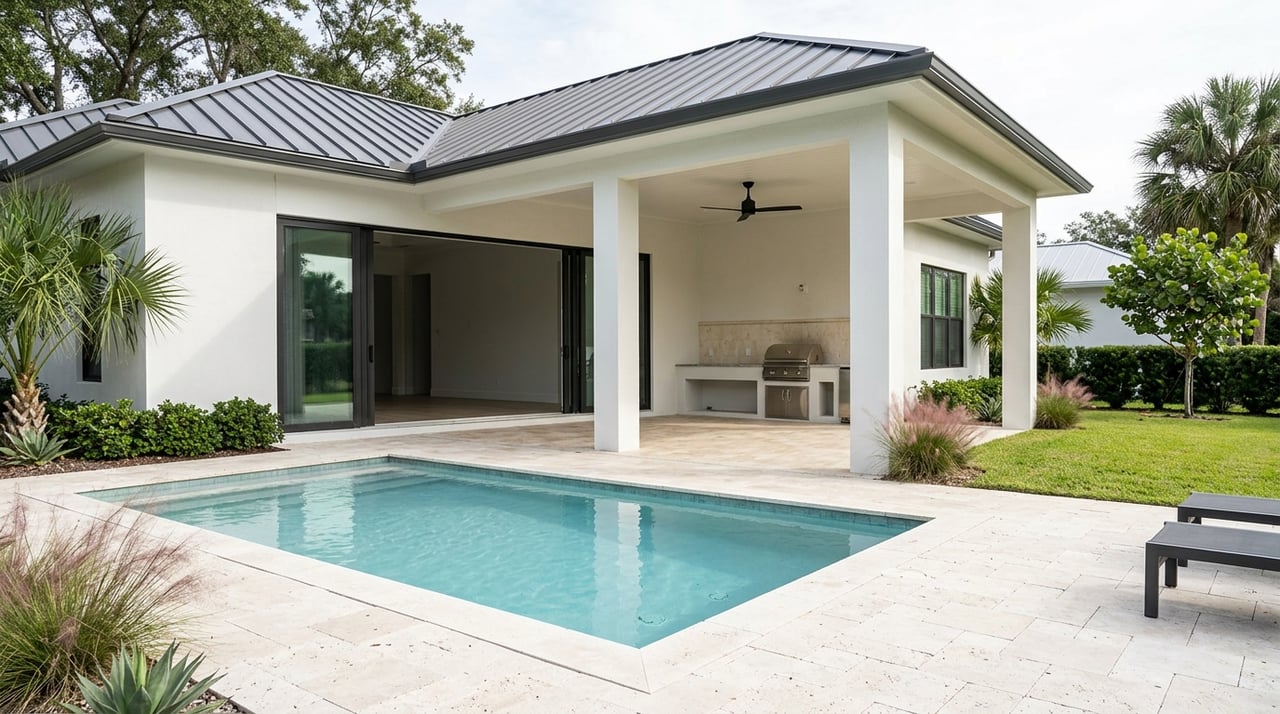
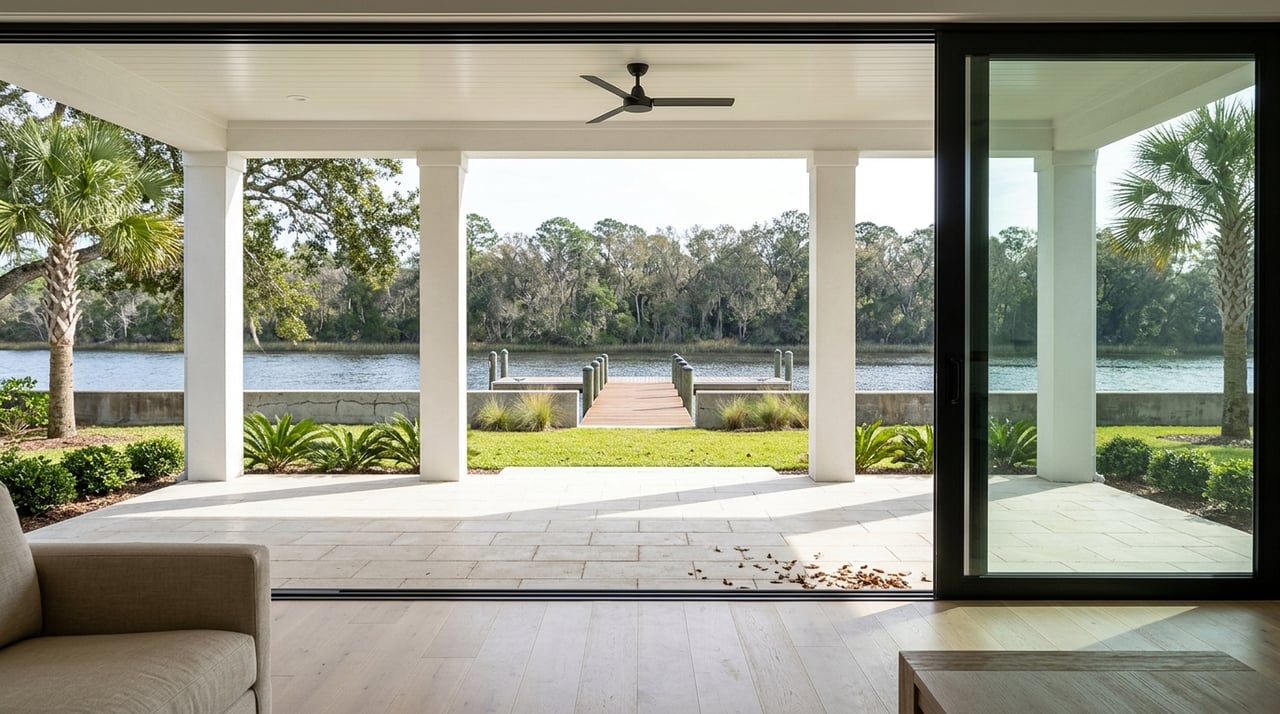
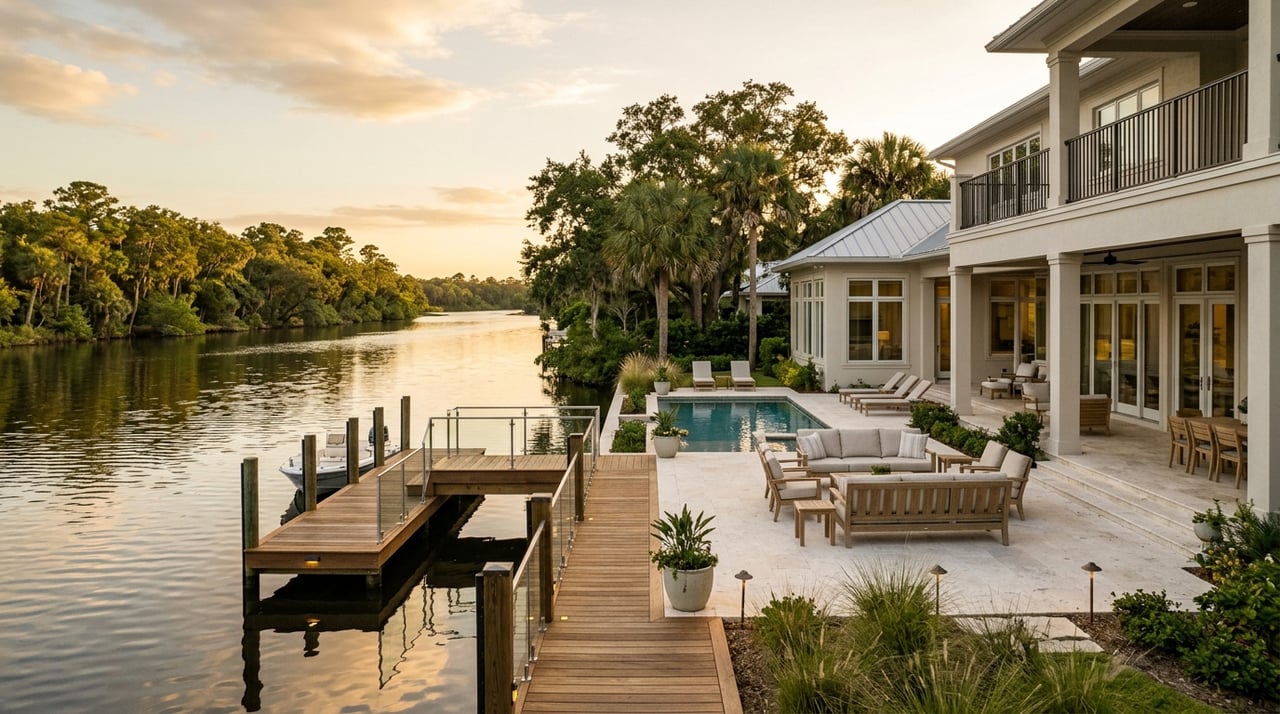
Waterfront living around Fleming Island and greater Clay County offers a different kind of value. Instead of shared amenities being the centerpiece, the property itself becomes the lifestyle feature. Your lot, shoreline, views, privacy, and direct relationship to the water all take on greater importance.
That can be incredibly appealing if you are looking for space, control, and a more personal connection to the outdoors. It can also be a stronger fit if you want a home that feels less managed and more tailored to your own priorities.
Private Water Access and Parcel Control
With a true waterfront property, boating and outdoor living can become part of your home experience rather than something accessed through a shared system. That can mean more privacy and more flexibility in how you enjoy the setting. It also means the shoreline, setbacks, and physical layout of the parcel matter more than they would in a typical interior-lot neighborhood.
Clay County zoning reflects that reality. Waterfront lots generally must be at least 100 feet wide at the ordinary high water line, and structures are generally set back 50 feet from the water unless an existing bulkhead is already permitted. In some specific areas, such as waterfront properties along Doctors Lake within the Neilhurst Plat, side setback rules differ from the general standard.
A Different Feel From Master-Planned Living
Waterfront enclaves and acreage-style properties usually feel less club-like than amenity communities. The focus is often on quiet enjoyment, lot characteristics, and what the parcel can support. That can appeal to buyers who want more independence in how they use their property.
At the same time, more independence often means more responsibility. The freedom that comes with a unique lot is part of the appeal, but it also means you need to understand the property in more detail before you buy.
How Clay County Shapes the Decision
Clay County gives buyers more than one path to a water-oriented lifestyle. The county’s network of public ramps, fishing piers, and kayak launches provides access to waterways including the St. Johns River, Black Creek, Doctors Lake, and Kingsley Lake. On Fleming Island specifically, Doctors Lake Park and the Lakeshore Boat Ramp are notable options.
That matters because you do not always need a private dock to enjoy the water. Some buyers are best served by a home near a public launch. Others prefer a neighborhood with resident docks or storage. And for some, full waterfront ownership is the right long-term fit.
Acreage Has Its Own Lifestyle Pattern
If you are also considering more land, Clay County’s land-use rules help explain why acreage properties feel so different from Fleming Island’s master-planned neighborhoods. Rural Residential can allow one unit per net acre. Agriculture/Residential and AR-2 categories can require much lower density depending on the land-use context.
Clay County also notes that Rural Residential areas are often outside the urban service area and may not be served by central water or sewer. That can create a very different ownership experience from a neighborhood where utilities and community systems are more centralized. For some buyers, that trade is worth it for space and privacy. For others, it adds more complexity than they want.
Maintenance and Risk: What Changes by Property Type
One of the clearest differences between amenity communities and waterfront enclaves is where the maintenance burden sits. In a master-planned setting, more of the common recreation is handled through the community structure. You still have homeowner responsibilities, but you are not personally maintaining the neighborhood pool, shared tennis courts, or resident dock system.
With waterfront or acreage property, more of the responsibility moves to you. That can include property-specific maintenance, flood awareness, shoreline conditions, and understanding what is allowed on the site. The home may offer more freedom, but it usually asks more from the owner.
Floodplain Considerations in Clay County
Clay County states that development within the floodplain requires a permit. Residential structures and the machinery and equipment serving them must be elevated at least one foot above base flood elevation. The county also notes that even areas outside FEMA special flood hazard zones can still flood from stormwater runoff.
This is why flood review should be part of your decision early, not late. If you are comparing waterfront homes near Doctors Lake, the St. Johns River, or other low-lying areas, parcel-level due diligence matters. It is part of understanding the true ownership picture.
Shoreline and Waterbody Rules
Shoreline ownership can also involve recurring management decisions. The Florida Fish and Wildlife Conservation Commission states that waterfront owners need a permit to control, remove, or alter aquatic plants along the shoreline unless an exemption applies. Clay County code also references bulkheads permitted by the St. Johns River Water Management District or the Florida Department of Environmental Protection.
That means shoreline changes are not just cosmetic projects. Whether you are thinking about plants, bulkheads, or other waterfront features, the property may come with regulatory layers that do not exist in a typical amenity neighborhood.
Which Lifestyle Fits You Best?
If you are trying to decide between an amenity community and a waterfront enclave on Fleming Island, a few simple questions can help. Your answers often point to the right fit faster than a list of home features ever will.
Choose Amenity Living If You Want
- Shared pools, courts, parks, golf, and neighborhood recreation
- A more structured, predictable environment
- Boating access without necessarily owning shoreline
- Less responsibility for maintaining major shared recreational features
- A neighborhood experience that feels active and connected
Choose Waterfront or Acreage If You Want
- More privacy and parcel control
- Direct connection to the water or more land
- Greater flexibility in how your property functions
- A home where views, shoreline, or lot characteristics drive value
- A lifestyle centered more on the property itself than community programming
A Smart Way to Compare Homes on Fleming Island
When you tour homes, try comparing them through the lens of daily living. Ask yourself where you would spend time, what you would maintain, how much structure you want around amenities, and how important direct water access is to you. Those practical questions usually reveal more than staging or finishes alone.
This is especially true in a market like Fleming Island, where lifestyle is often the real differentiator. A home in Eagle Harbor, a property in Fleming Island Plantation, and a private waterfront parcel near Doctors Lake can all be appealing for very different reasons. The key is knowing which set of trade-offs actually fits you.
If you want help comparing club-community living with waterfront ownership in Clay County, Glen Hamilton can help you evaluate the lifestyle, property details, and long-term fit with a local perspective.
FAQs
What is the difference between amenity communities and waterfront enclaves on Fleming Island?
- Amenity communities like Fleming Island Plantation and Eagle Harbor are built around shared recreation and managed common areas, while waterfront enclaves focus more on private lot characteristics, water access, and parcel control.
What amenities do Fleming Island Plantation and Eagle Harbor offer?
- Fleming Island Plantation offers pools, courts, parks, playgrounds, golf, and nearby shops and restaurants, while Eagle Harbor offers pools, tennis, pickleball, golf, parks, docks, and resident-oriented access systems.
Can you enjoy boating on Fleming Island without buying waterfront property?
- Yes. Eagle Harbor offers resident boat and RV storage near Doctors Lake, and Clay County also provides public water access through locations such as Doctors Lake Park and the Lakeshore Boat Ramp.
What rules should buyers expect in Fleming Island amenity communities?
- Buyers should expect structured access rules such as amenity accounts, proof of residency, guest limits, dock policies, pool check-ins, and facility-use requirements.
What should buyers know about waterfront property rules in Clay County?
- Buyers should review lot width, setback, floodplain, and shoreline-related requirements, because waterfront ownership can involve permitting, elevation standards, and rules tied to plants, bulkheads, and other improvements.
Are acreage properties around Fleming Island different from master-planned neighborhoods?
- Yes. Acreage properties in Clay County often follow lower-density land-use patterns and may be outside urban service areas, which can mean a different utility, maintenance, and ownership experience than a master-planned community.
How do you decide between amenities and land in Clay County?
- A helpful approach is to compare how much you value shared recreation, rule structure, private space, water access, and ongoing property responsibility, then match those priorities to the type of home that supports them best.