Selling a waterfront home in Fleming Island is not the same as selling a typical house. Buyers are not just looking at bedrooms and square footage. They are also judging the view, the dock, the outdoor living space, and the records behind every waterfront feature. If you want to sell with confidence in Clay County’s current market, the right prep can help you stand out from day one. Let’s dive in.
Why preparation matters in Fleming Island
Fleming Island remains a market where presentation has a real impact. Over the three months ending May 2026, Redfin reported a median sale price of $459,725 in Fleming Island with a median 50 days on market. In Clay County overall, the median sale price was $348,953 with an average of 57 days on market.
That tells you something important. Waterfront buyers in Fleming Island are willing to pay for the right property, but they still compare condition, pricing, and presentation carefully. Realtor.com also identified Clay County as a seller’s market in June 2026 and reported that homes were selling at about 99% of asking price.
For you as a seller, that means confidence should come from preparation, not guesswork. A home that looks polished, shows its lifestyle clearly, and has organized documentation is in a stronger position from the first photo to the first weekend on market.
Start with the waterfront lifestyle
When buyers tour a waterfront home, they are imagining how they will live there. They want to picture coffee by the water, evenings on the lanai, and easy access to the dock or pool. If those spaces feel unfinished or disconnected, the home can lose momentum even if the interior is beautiful.
Florida Realtors has reported strong buyer interest in features like outdoor kitchens, weather-resistant landscaping, screened-in porches, pergolas, outdoor showers, and fireplaces. That does not mean you need a major renovation before listing. It does mean your exterior spaces should feel intentional, useful, and well cared for.
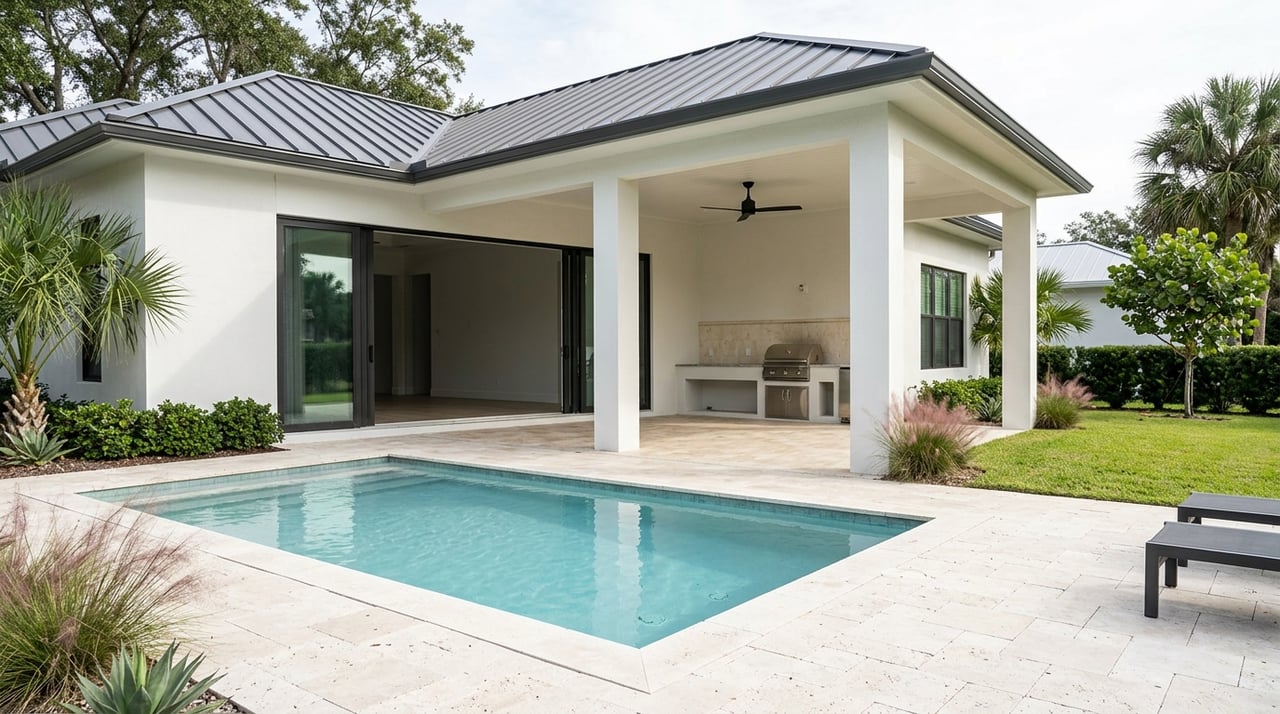
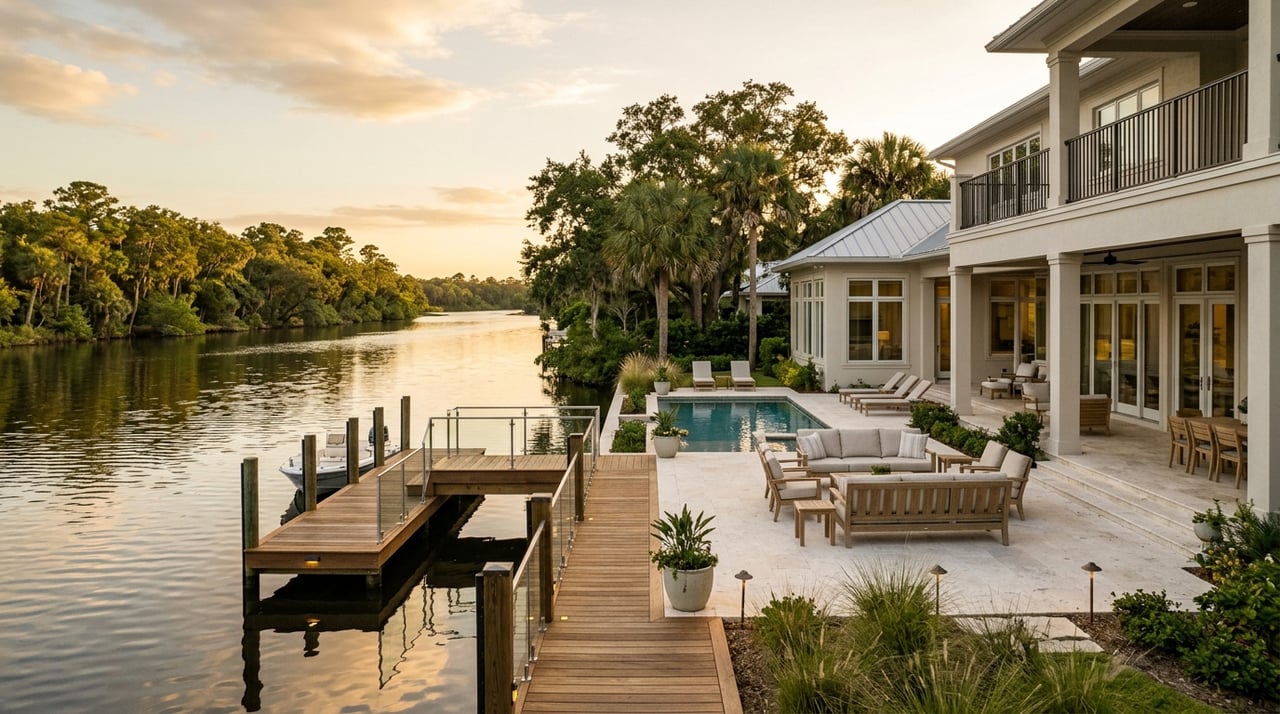
Think of your backyard as part of the home’s main living area. On a waterfront property, the rear elevation, patio, pool, dock, and water view are often some of the biggest selling points. Your goal is to make those features feel easy to enjoy and easy to understand.
Focus on these outdoor areas
Before listing, pay close attention to:
- The condition and appearance of the dock and boat lift
- The seawall or shoreline edge, if applicable
- Patio, lanai, pool, and seating areas
- Landscaping that frames the view without blocking it
- Rear exterior lighting and overall curb appeal from the water side
Even small improvements can help. Clean pavers, trimmed landscaping, fresh outdoor cushions, and a tidy dock can make the entire property feel more move-in ready.
Arrange the interior around the view
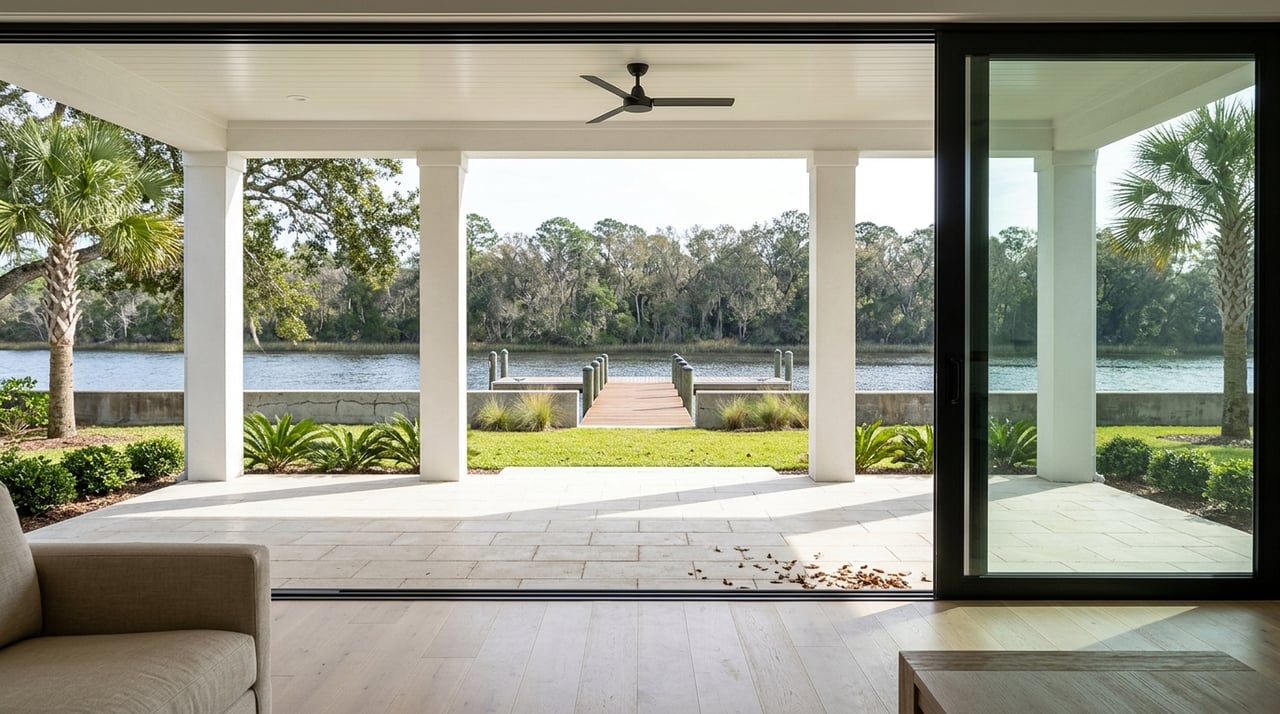
Inside the home, your furniture should support the waterfront setting instead of competing with it. Buyers should be able to walk in and immediately notice the light, the windows, and the connection to the water.
Staging matters here. According to the 2025 staging survey from the National Association of Realtors, 83% of buyers’ agents said staging made it easier for buyers to visualize a property. The most commonly staged rooms were the living room, primary bedroom, and dining room, which makes sense for waterfront homes where those spaces often connect directly to the best views.
Create better view corridors
As you prepare each room, ask yourself one simple question: Does this room lead the eye toward the water? If not, a few adjustments may help.
Try these steps:
- Remove extra furniture that interrupts the line of sight
- Open blinds and window coverings to bring in natural light
- Simplify tabletops, counters, and shelves
- Reposition seating to face windows or glass doors when possible
- Clear personal items that distract from the setting
NAR guidance also notes that the camera magnifies clutter. A room that feels acceptable in daily life can look crowded in listing photos. Simpler layouts usually read brighter, larger, and more inviting online.
Prepare for photos and first impressions
Most buyers will see your home online before they ever book a showing. That makes your launch window especially important. NAR reports that high-resolution photos and video tours are essential because most buyers shop online, 52% found the home they purchased online, and 81% rated listing photos as the most useful feature in their search.
For a waterfront listing, photography should do more than make the home look pretty. It should accurately show the relationship between the house, the outdoor living spaces, and the water access. Buyers want to understand what they are getting, not be surprised later.
What to do before the photo shoot
Use this checklist before your home is photographed:
- Put away mail, calendars, and personal photos
- Remove visible passwords, documents, or sensitive information
- Declutter kitchen and bathroom counters
- Hide trash cans, pet items, and cleaning supplies
- Clean windows and glass doors thoroughly
- Make beds and smooth linens
- Stage patios, docks, and pool areas neatly
This is also a smart time to think about privacy. NAR guidance recommends removing sensitive items before showings and notes that a no-photography note in the MLS may be appropriate in some cases. Waterfront homes often attract extra attention to views and outdoor areas, so a thoughtful plan matters.
Get your flood information organized early
One of the biggest confidence builders for a waterfront sale is having your flood-related information ready before the listing goes live. Buyers often ask these questions early, and delays can create uncertainty.
Clay County provides flood resources that direct property owners to FEMA index maps, the county Flood Insurance Study, and a storm-surge map. The county identifies its primary flood zones as X, X shaded, A, AE, and Floodway. Zones A, AE, and Floodway are considered high-risk areas, and mortgaged structures in those zones require flood insurance, flood permits for development, and elevation certificates for new structures or substantial improvements.
Florida law also now requires sellers of residential real property to provide a flood disclosure at or before contract execution. That disclosure includes whether the seller has filed flood claims or received federal assistance related to flooding.
Gather these flood-related records
Before listing, it helps to assemble:
- Your current flood zone information
- Flood insurance documents, if applicable
- Elevation certificate, if you have one
- Records of past flood claims, if any
- Documentation of mitigation work or improvements
- Information needed for the required seller flood disclosure
Having this information ready does not just help with compliance. It also signals that you have cared for the property and are prepared for informed buyer questions.
Verify dock, seawall, and permit records
If your home includes a dock, boat lift, seawall, or other shoreline improvements, buyers may want proof that the work was properly handled. This is often one of the most important behind-the-scenes steps for a waterfront sale.
The Florida Department of Environmental Protection regulates many land-surface alterations through its ERP program. Some single-family dock projects may be handled through self-certification, while other dock, fill, or submerged-lands work may require permits or additional authorization. In Clay County, permit applications run through the online EPL/CAP system, and a certified Notice of Commencement is required before the first inspection can be scheduled.
You do not need to overwhelm buyers with paperwork. You do want to be ready with records that support the home’s story and reduce avoidable concerns.
Documents worth locating now
Look for:
- Dock and boat lift permits
- Seawall or shoreline improvement records
- Final inspection records, if available
- Notices of Commencement tied to major projects
- Receipts, warranties, or contractor information for recent work
- Permits for additions, remodels, pools, or exterior upgrades
If you are missing something, it is better to find that out early. A record search before listing is usually much easier than trying to answer a buyer concern under contract.
Price and present the home together
Pricing and presentation work best as a team. In a market where Clay County homes were selling at about 99% of asking price in June 2026, the goal is not simply to list high and hope. The goal is to enter the market with a price that reflects the home’s condition, setting, features, and documentation.
This matters even more for waterfront homes because they are rarely cookie-cutter. Water access, view orientation, dock setup, outdoor living quality, and shoreline improvements all affect how buyers see value. A strong pricing strategy should account for those details while still respecting what buyers can compare across the local market.
When your home is clean, staged, well documented, and professionally marketed, price conversations become easier. Buyers are more likely to focus on the lifestyle and value of the property instead of searching for reasons to discount it.
Build confidence before you list
The best waterfront listings do not feel rushed. They feel thoughtful, complete, and easy for buyers to trust. That is especially true in Fleming Island, where lifestyle appeal and practical due diligence go hand in hand.
If you are getting ready to sell, start with the big four: clean presentation, outdoor-lifestyle staging, flood documentation, and permit records. Those steps can help your home show better online, feel stronger in person, and move through the selling process with fewer surprises.
When you want a calm, strategic plan for selling your waterfront property in Fleming Island, Glen Hamilton can help you prepare, position, and market your home with the level of detail these properties deserve.
FAQs
What should I fix first before selling a Fleming Island waterfront home?
- Start with anything that affects first impressions or buyer confidence, especially clutter, deferred exterior maintenance, landscaping, dock appearance, and missing property records.
What flood information do sellers need for a Clay County waterfront home?
- You should be ready with your flood zone information, flood insurance documents if applicable, any elevation certificate you have, records of flood claims if any, and the information needed for Florida’s required flood disclosure.
Do buyers ask for dock and seawall permits in Clay County?
- Yes, many waterfront buyers want documentation for docks, boat lifts, seawalls, and other shoreline work, along with records for major improvements and permits tied to the property.
How should I stage a waterfront home in Fleming Island?
- Arrange the home so main living areas and outdoor spaces emphasize the water view, open blinds, reduce clutter, and make the patio, lanai, dock, and pool feel like part of the everyday living space.
Why do listing photos matter so much for waterfront homes?
- Most buyers begin online, and strong photos help them understand the home’s setting, water access, and indoor-outdoor flow during the critical first days on the market.