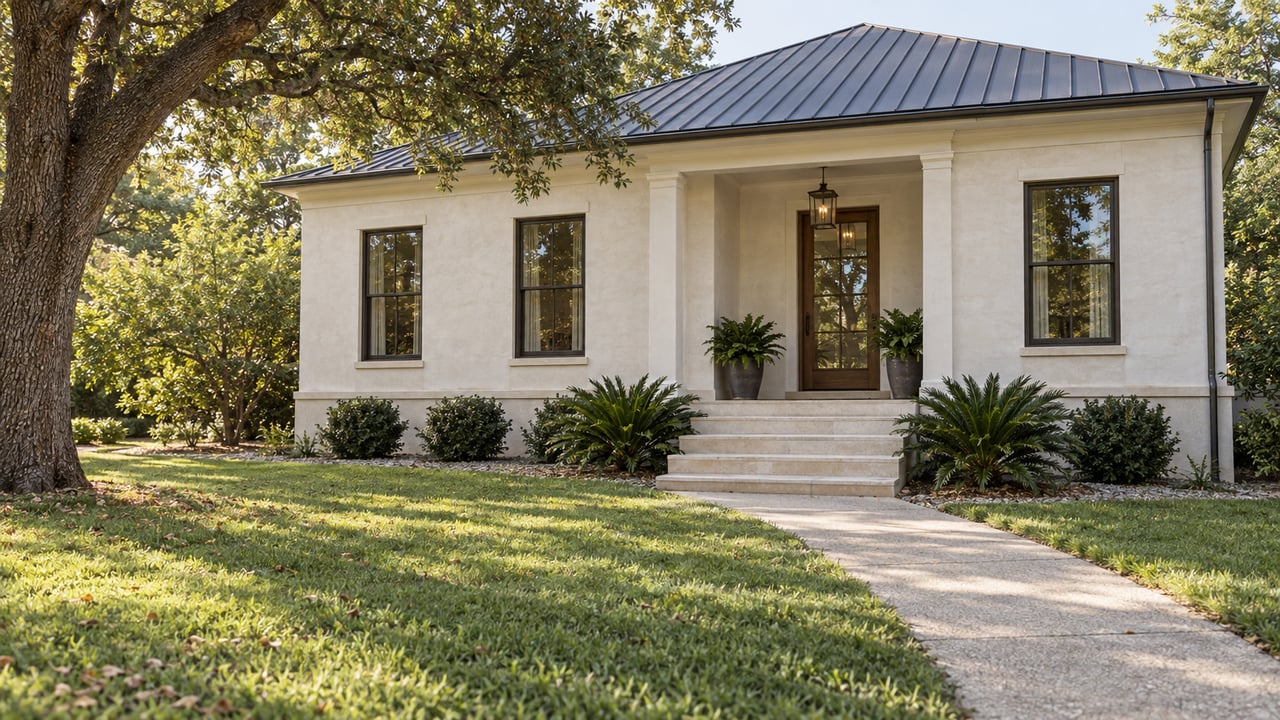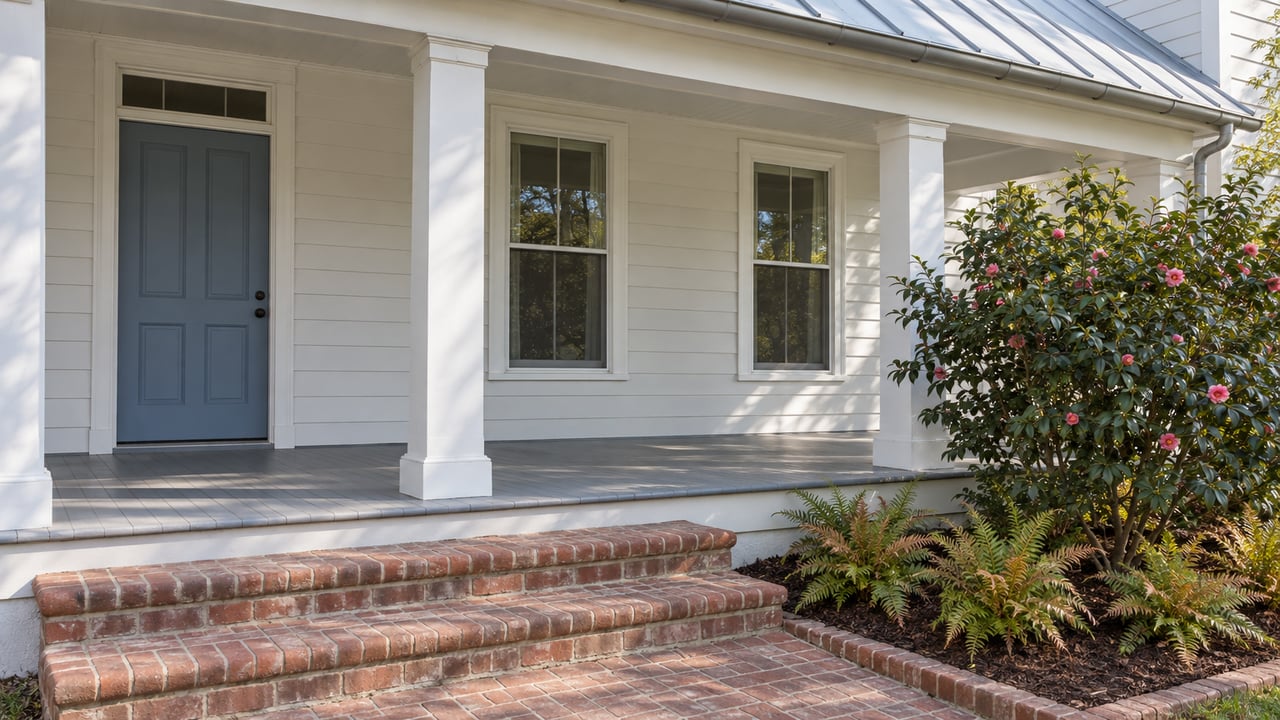
On an older home in the Riverside-Avondale Historic District, the inspection period can turn up a repair that the insurer wants done before it will write a policy. The City of Jacksonville then gets a say in how that repair looks. You'll know about the insurer's condition within days. Whether the City's approval takes one to two weeks or more than a month depends mostly on things already visible on the house: the roof material, whether the windows are original, and whether a previous owner changed either one without approval. A buyer who reads those clues before writing an offer has a much better idea of which timeline is coming.
Two Rulebooks Running on Different Calendars
The insurance side is triggered by age, and nearly every house in the district qualifies. Citizens Property Insurance requires a four-point inspection of electrical, plumbing, HVAC and roof for homes more than 20 years old. It says serious hazards such as exposed wiring or active leaks should be repaired before anyone applies for coverage. Roofs older than 25 years for shingle, or 50 years for tile, slate, clay, concrete or metal, need documentation of at least five years of remaining useful life. If the roof has less than that, Citizens wants proof of a full replacement before it writes the policy.
State law sets a floor under all insurers. Under section 627.7011 of the Florida Statutes, an insurer can't refuse or nonrenew a policy solely because a roof is less than 15 years old. For an older roof, the homeowner can pay for an inspection by an authorized inspector. If that inspection shows five or more years of useful life left, age alone can't be the reason for a refusal.
The City side is set off by anything on the exterior. A Certificate of Appropriateness, or COA, is required for exterior work in Jacksonville's locally designated historic districts, and that includes window and siding repairs. How long it takes depends on who reviews it.
| Administrative review | Jacksonville Historic Preservation Commission | |
|---|---|---|
| Who decides | City preservation staff | The commission, at a public hearing |
| Typical timing | One to two weeks | At least one month; the City advises filing about six weeks before the meeting |
| Fee for alteration applications | Not stated in City sources reviewed | $315 |
Riverside Avondale Preservation acts as a neighborhood liaison but doesn't decide COAs. Staff approve cases that fit the administrative criteria, and everything else goes to the commission. In practice, most of the uncertainty around closing comes down to which column of that table your repair lands in.
The Roof Already on the House Decides the Route
The City's 2026 COA Matrix sends a roof to staff review when the new roof matches the existing or documented historic roof in design, and in color where color is character-defining. Staff can also approve a change in roof material when the Florida Building Code requires it. A roof that doesn't match the documented one goes to the commission, and so does one the City calls "questionable" for the architectural style when the code doesn't require it.
Two recent cases show where the line falls. At 2351 Riverside Avenue, a two-story frame vernacular house built around 1913 with Queen Anne influence, the owner asked to replace historic metal shingles with light gray composition shingles. Staff noted that metal roofs are rare in the Riverside Avondale Historic District and get review similar to requests to replace clay tile. They called the roof one of the house's most character-defining features. The commission denied the request after a hearing on March 26, 2025.
At 3208 Tivoli Street, the commission went the other way and approved metal roofing on a low-pitch roof, because shingles would not have met building-code standards. The approval came with conditions: metal shingle, shingle-imitation panel, 5V crimp or standing seam, and no corrugated panels.
For a buyer, this means the roofing material you see from the sidewalk on a showing tells you a lot. If the house has an ordinary composition roof and the plan is a like-for-like replacement, it most likely fits the staff path. If it has original metal shingles, slate or tile, any plan to switch to a cheaper material has to clear a higher bar and will probably go to a hearing.
Windows Are Where the Wind Credit and the Repair-First Rule Meet
Windows involve the same two rulebooks, but they pull in different directions. Florida's wind-mitigation form, revised as OIR-B1-1802 (Rev. 04/26), has been required for Citizens inspections done on or after April 1, 2026. The form grades the whole house by its weakest opening, requires openings to be in good condition, and marks damaged openings as ineligible for wind-mitigation rate differentials.
The City starts with repair. Its window guidance says repair should be tried before replacement, and staff must find a window beyond repair before replacement is considered. On a contributing house, staff can approve irreparable historic windows being replaced with wood, wood-blend, aluminum-clad or like-for-like windows that match the design, placement and arrangement. Replacing windows that can still be repaired, or switching to vinyl, goes to the commission.
Some local cases show how much detail this can involve. For a 34-window proposal at 1464 Avondale Avenue, staff recommended approval with conditions: repair 14 second-floor windows, use wood, wood-clad or wood-blend windows in historically compatible patterns on the first floor, avoid vinyl trim, and recess the replacements three inches. At 3855 St. Johns Avenue, a contributing property, the owners got approval to replace 20 remaining wood windows only after City Council's Land Use & Zoning committee overturned a commission denial on August 4, 2026. The committee found their evidence that the windows were beyond repair to be sufficient.
The overlap matters. A buyer who plans to replace original windows for a better wind rating should get the product approved by both the insurer and the Historic Preservation Section before ordering anything.
The Window Swap a Previous Owner Already Made
One of the less obvious risks is work that's already done. The commission's July 22, 2026 agenda included 2516 Oak Street under its category for work started or completed without a COA. The request was a window replacement, staff recommended denial, and the commission denied it 6–0. Resident News has reported that code-enforcement officers enforce work done outside an approved COA.
The City is also paying closer attention to enforcement. The commission's Demolition by Neglect Task Force reported in March 2025 that $196,440,890 in historic-district fines had brought in only $431,719 in payments. At the July 22 meeting, Commissioner William Hoff announced a July 30, 2026 public meeting, hosted by Councilmember Jimmy Peluso, to discuss legislation building on that report. The sources we reviewed don't confirm that any legislation has passed. Still, a house with newer windows on a street-facing elevation is worth a records check before you rely on those windows for a wind credit.
What This Looks Like on the October Calendar
The commission's 2026 schedule sets Thursday, October 15 as the next completeness deadline, Friday, October 23 as the payment deadline, and Wednesday, November 18 as the hearing date. As of today, October 4, 2026, that leaves 11 days to submit a complete application for a commission-level roof or window request if you want it heard in November. A contract written now around repairs that need a hearing should allow for that date, and for the chance of a denial or an appeal after it.
A practical order of steps for an older Riverside or Avondale house:
- Check the address on the City's historic district map and contributing list, since replacement rules differ by contributing status.
- Get the insurer's conditions in writing, along with the four-point report and any roof inspection.
- Show City preservation staff the proposed roofing or window product before committing to a contractor.
- Get the COA, then the permits, and keep dated records. Citizens' four-point and roof forms ask for roof age, permit dates and whether a replacement was full or partial.
Plumbing, electrical and HVAC work that doesn't change the exterior generally doesn't need a COA, so those four-point items usually move at the contractor's pace.
Questions That Come Up in These Deals
Did Florida change the roof-age rules in 2026?
Not through the main bills. SB 808 and its House companion, HB 815, proposed broader roof-age protections, and both died in committee on March 13, 2026. The 15-year and five-year standards in section 627.7011 still apply.
Can My Safe Florida Home help pay for windows or roof work?
Possibly, but confirm the program's current status in its portal. The program homepage, published September 16, 2026, advertises free wind-mitigation inspections and grants of $10,000. The 2025–26 program terms say it's closed to new applications. For grants, the terms require a homestead, an insured dwelling value of $700,000 or less, and a building permit date before January 1, 2008. Any upgrade it funds on a historic house still needs a COA.
Does the policy cover the extra cost of rebuilding to historic standards?
That depends on the policy, so ask your insurance agent. Florida law requires insurers to offer law and ordinance coverage, which helps pay the added cost of meeting laws that regulate repairs. Unless the policyholder rejects it in writing, the policy includes this coverage at 25 percent of the dwelling limit, and insurers must offer a 50 percent option. In a district where a rare roof may have to be replaced with the same material, that's a fair question to raise before binding coverage.
If you're weighing a Riverside or Avondale home and want to know early whether its roof and windows are headed for staff review or a commission hearing, Glen Hamilton can help you read the house, the insurer's conditions and the City calendar together before you commit to a contract timeline. Let's Connect.